
Why
Risk screening matters
more than ever
Small and medium-sized enterprises depend on business partner relationships to operate and grow. Suppliers deliver essential goods, consultants shape strategy, distributors expand market reach, and contractors support operations. But every external relationship also introduces exposure. Increasingly, regulators, enterprise clients, banks, and investors expect SMEs to understand who they are doing business with, not just commercially, but from a risk perspective.
Third-party risk is no longer just a large corporate concern. Sanctions enforcement has intensified globally. Corruption investigations frequently involve intermediaries. Human rights and environmental scrutiny now extend deep into supply chains. Reputational damage spreads instantly.
If you run an SME, you are already exposed to third-party risk. You just may not be managing it.
Third-party risk management used to be a large-enterprise discipline. Dedicated compliance teams. Expensive investigative databases. Forty-page due diligence reports.
Today, the expectations have shifted. Regulators are intensifying enforcement around sanctions, anti-bribery, and supply chain accountability. Enterprise buyers are reducing supplier lists to “low-risk” partners. Investors and banks are scrutinizing ESG exposure across value chains.
This affects SMEs directly. You do not need a compliance department. But you do need a defensible process.
Every supplier, consultant, distributor, agent, or contractor you onboard becomes part of your risk perimeter. If they are sanctioned, under investigation, politically exposed, linked to corruption, or facing human rights or environmental allegations – your business absorbs the consequences.
The goal is defensible, consistent, commercially realistic due diligence that protects your business while enabling opportunity.
SME reality
Informal checks are no longer enough
Many SMEs rely on informal vetting methods. A quick internet search. A review of Companies House records. A glance at LinkedIn. Perhaps a personal referral. These steps feel reasonable, but they are inconsistent and incomplete.
Search engines do not systematically screen global sanctions lists. They do not reliably flag politically exposed persons (PEPs). They do not consolidate debarment lists, financial crime signals, human rights indicators, and environmental risk data into a coherent risk profile. Most importantly, they leave no defensible audit trail.
If a regulator, enterprise client, or banking partner asks how a third party was vetted, “we Googled them” is no longer sufficient.
The shift is not toward exhaustive investigations for every relationship. It is toward structured, proportionate screening that demonstrates reasonable care.
Trusty Compliance platform
No subscriptions. No fees.
Our Trusty Compliance platform is credit-based. No subscriptions or contracts required.
4-step guide to
Business partner screening
SMEs do not need enterprise-grade investigative reports for every vendor. What they need is a consistent framework that scales according to risk exposure.
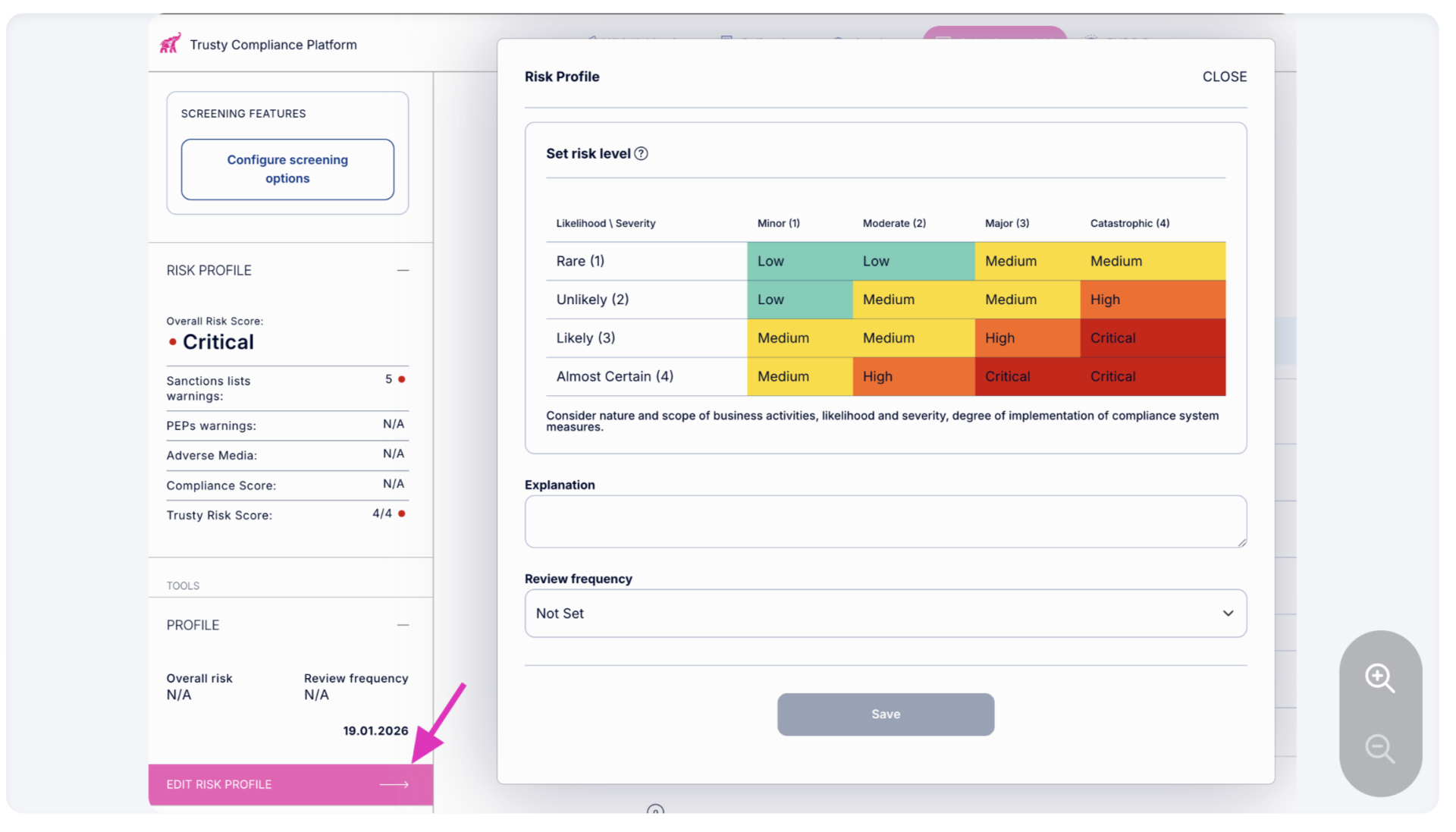
A low-value domestic supplier does not require the same scrutiny as an overseas distributor handling significant revenue or interacting with government entities. The key is categorization. By segmenting partners into lower-risk, moderate-risk, and higher-risk categories, SMEs can align screening intensity with actual exposure.
At a minimum, even routine partners should be screened against global sanctions lists and exclusion registers to ensure there are no obvious prohibitions or red flags. As exposure increases - whether due to geography, contract value, access to sensitive data, or interaction with public officials - screening should expand to include PEP databases, financial crime indicators, structured adverse media analysis, and human rights and environmental risk signals.
Step 1
Screen every partner -
no exceptions
All suppliers, contractors, distributors, consultants, and intermediaries should undergo a consistent baseline screening. The objective is not to investigate deeply at the outset. But instead to ensure that no obvious regulatory, reputational, or ESG risk is overlooked.
A baseline screening should include:
✔ Global sanctions lists
✔ Debarment and exclusion lists
✔ Politically Exposed Persons (PEP) screening
✔ Anti-corruption and financial crime indicators
✔ Human rights indicators
✔ Environmental indicators
✔ Adverse media results
Using an AI-powered screening platform such as QuickScreen360, SMEs can conduct this consistently, generate timestamped reports, and reduce false positives through AI-assisted filtering.
This establishes a defensible starting point for every relationship.
Step 2
Escalate when risk is flagged
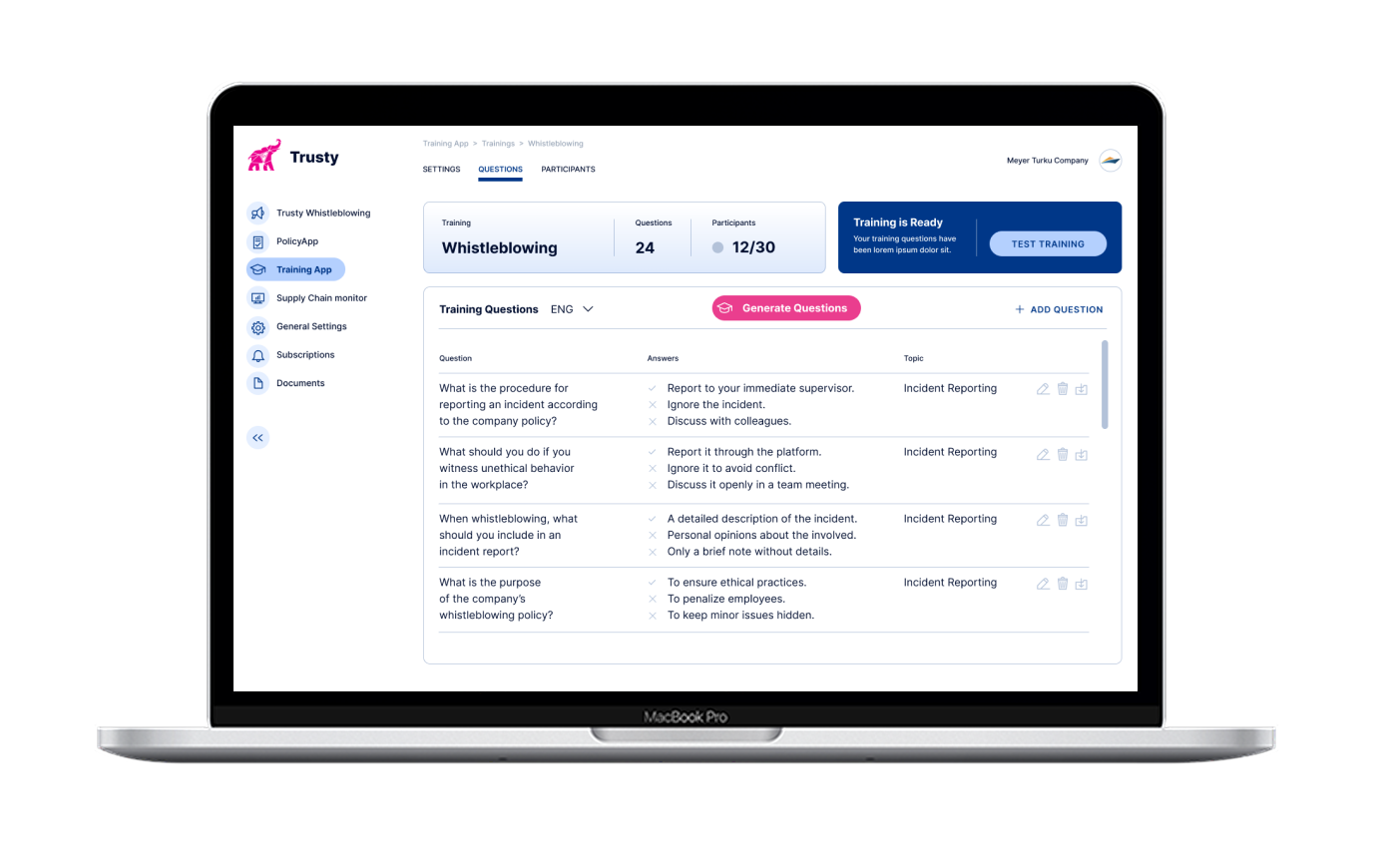
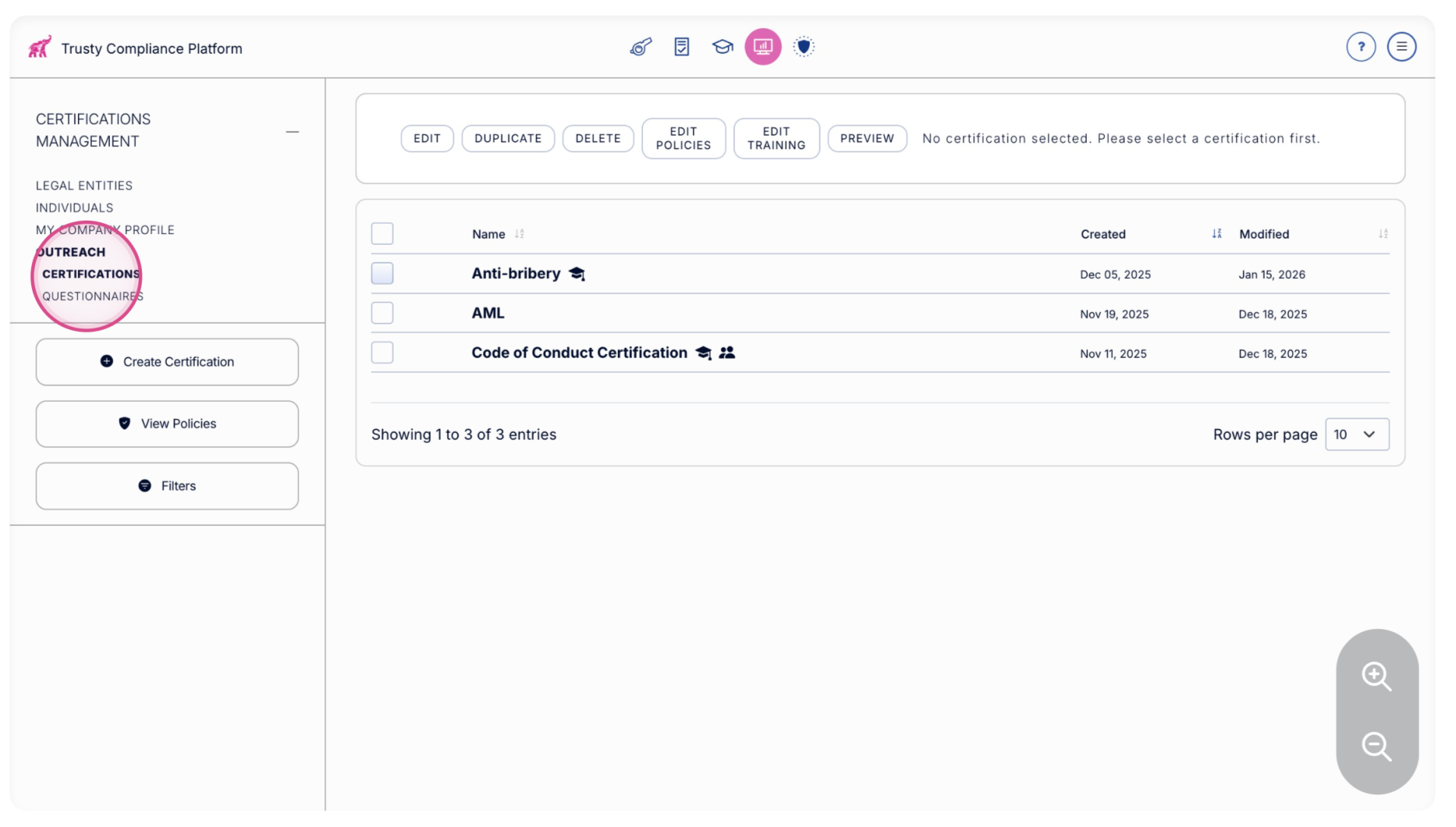
When a risk indicator appears, the next step is follow-up action. Outreach activities can be initiated, questionnaires sent, documentation requested, and policies or AI-generated training materials distributed to the third party.
If the screening identifies a material signal, such as:
✔ A potential sanctions match
✔ PEP exposure
✔ Repeated adverse media
✔ Human rights or environmental indicators
✔ Financial crime-related alerts
The next step is to seek clarification.
This may include:
✔ Sending questionnaires
✔ Requesting supporting documentation
✔ Launching outreach to the partner
✔ Distributing relevant policies
✔ Requesting training or certifications
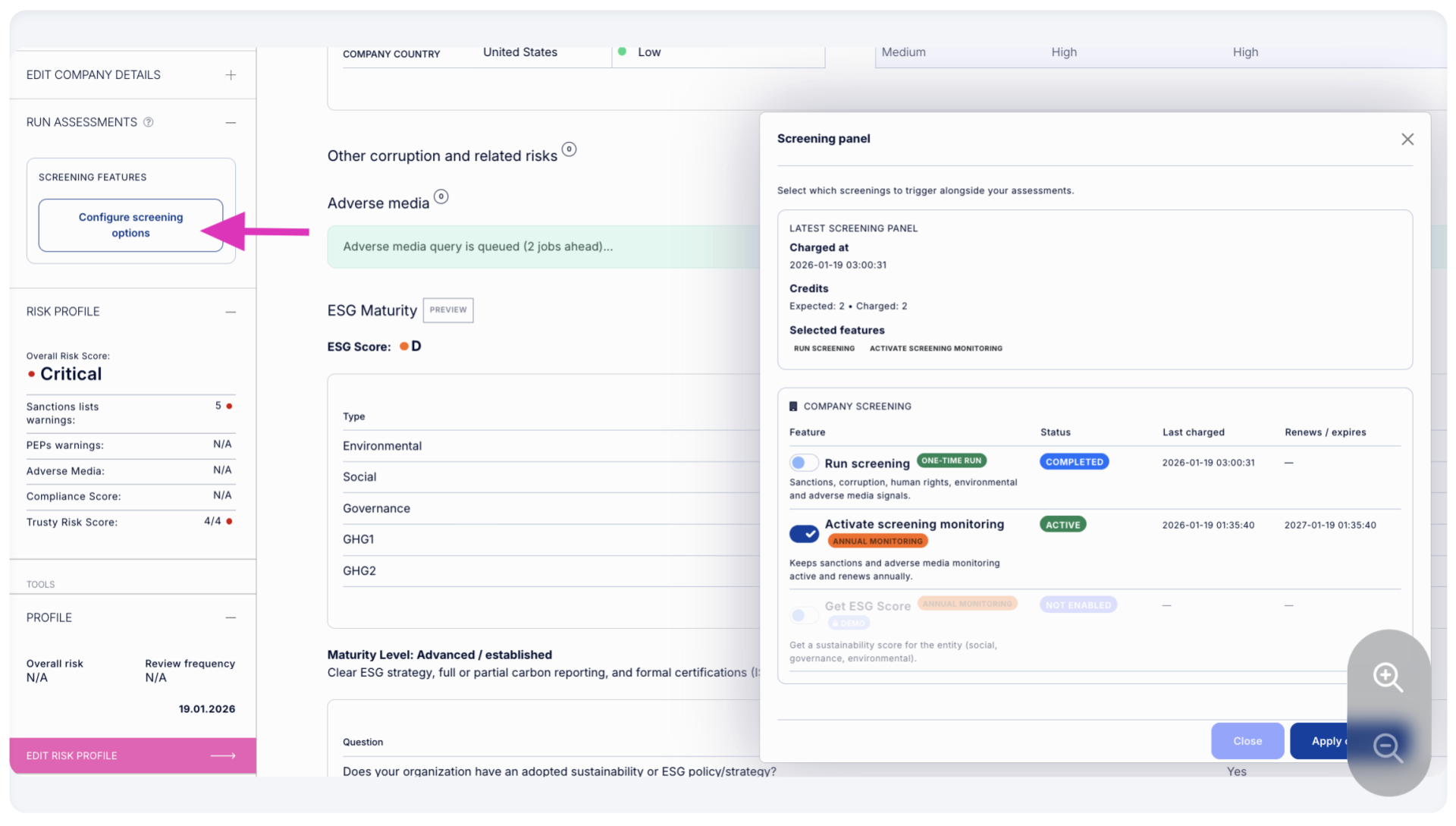
QuickScreen360 supports this escalation workflow directly within the platform, allowing SMEs to document follow-up actions and retain verified evidence alongside the original screening result.
This creates an audit trail showing that risk was identified, assessed, and addressed proportionately. This transforms screening from a passive check into an active risk management workflow.
Step 3
Apply deep investigation when necessary
The key principle is: Make initial third party screening universal and affordable, and use in-depth investigations only when risk, geography, or exposure makes them necessary.
In rare cases, clarification may not resolve the concern.
At that stage, deeper investigative reports from enterprise data providers such as Dun & Bradstreet may be appropriate.
These reports provide more extensive financial profiling and credit intelligence, but they come at a significantly higher cost and are not proportionate for routine onboarding.
Deep investigative platforms are powerful. They are built for credit analysis, M&A transactions, and global procurement teams.
They are also expensive and excessive for routine SME partner onboarding. Running enterprise-level investigations on every contractor is commercially unrealistic.
Most SMEs cannot justify enterprise-level investigative depth for every supplier.
Step 4
Ongoing monitoring
Risk exposure is not static. Sanctions lists are updated regularly, adverse media can emerge unexpectedly, and enforcement actions may surface long after a partner has been onboarded. A screening result that was clear at the start of a relationship may not remain so over time.
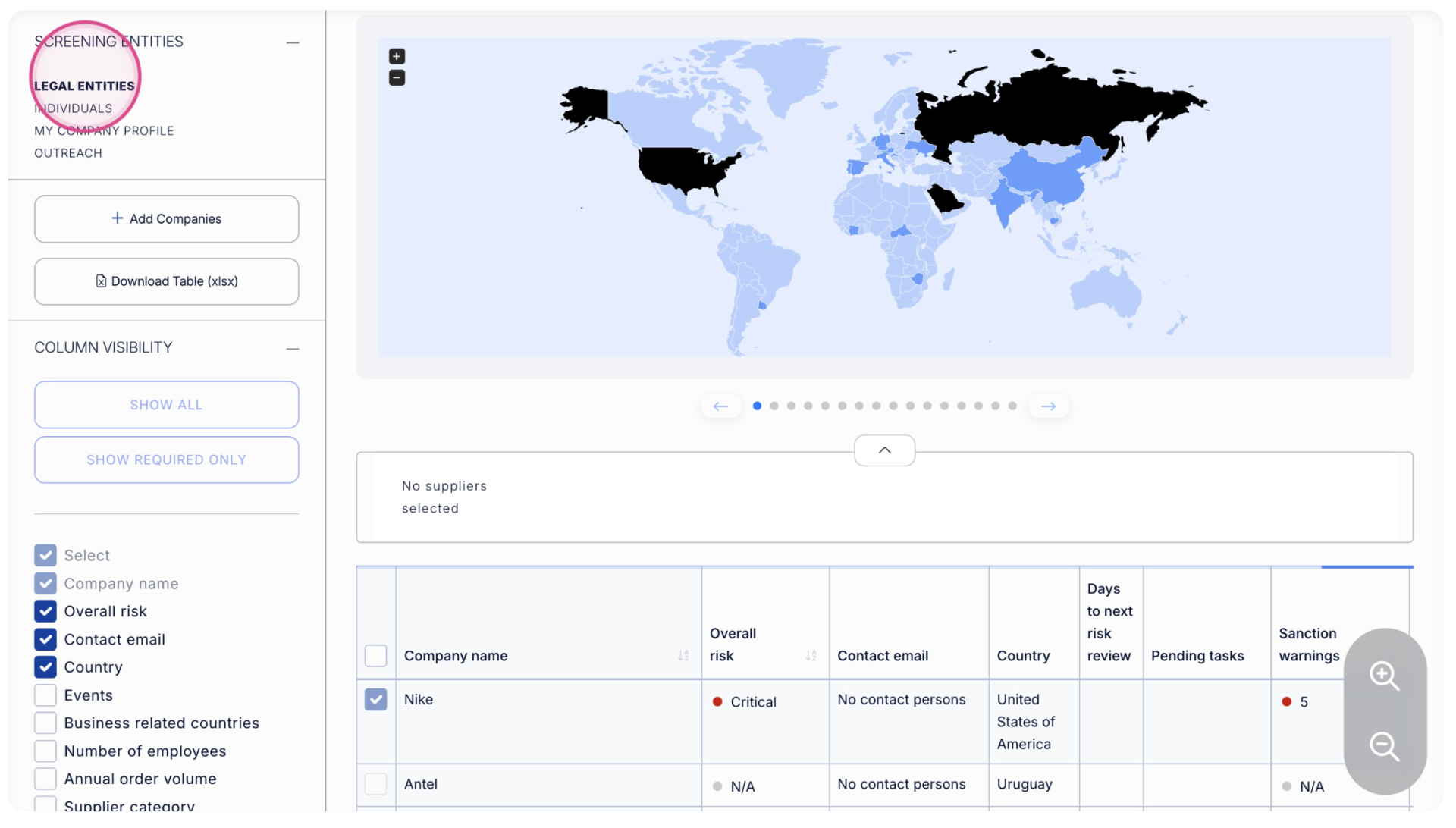
For this reason, third-party risk management should not be treated as a one-time onboarding exercise. Ongoing monitoring allows businesses to identify material changes in a partner’s risk profile as they arise. Tools such as QuickScreen360 support batch onboarding and automated alerts, making it operationally feasible for SMEs to monitor multiple partners and receive notifications when relevant risk indicators change.
In practice, this shifts screening from a static check to a more continuous oversight process, helping SMEs maintain visibility across their third-party network without requiring the infrastructure of a large enterprise compliance team.
AI-powered third-party risk assessment
Affordable and scalable risk screening
QuickScreen360 is designed specifically to make structured third-party risk screening commercially viable at scale. It screens partners against global sanctions lists, debarment and exclusion databases, politically exposed person records, anti-corruption and financial crime indicators, as well as human rights and environmental signals. Rather than presenting fragmented raw data, it uses AI-assisted filtering to reduce false positives and highlight meaningful risks in a consolidated report.
Instead of manually searching multiple sources and to interpret scattered results, users receive prioritized findings that support faster, more confident decision-making.
Instead of manually searching multiple sources and attempting to interpret scattered results, users receive prioritized findings that support faster, more confident decision-making.
Equally important, screening does not end with a report. When a risk indicator appears, the platform enables follow-up action. Outreach activities can be initiated, questionnaires sent, documentation requested, and policies or AI-generated training materials distributed directly to the third party. This transforms screening from a passive check into an active risk management workflow.
Every screening produces timestamped, source-linked, exportable reports.
Screen against critical risk indicators
✔ Global sanctions lists
✔ Debarment and exclusion lists
✔ PEP databases
✔ Human rights indicators
✔ Environmental indicators
✔ Anti-corruption and financial crime signals
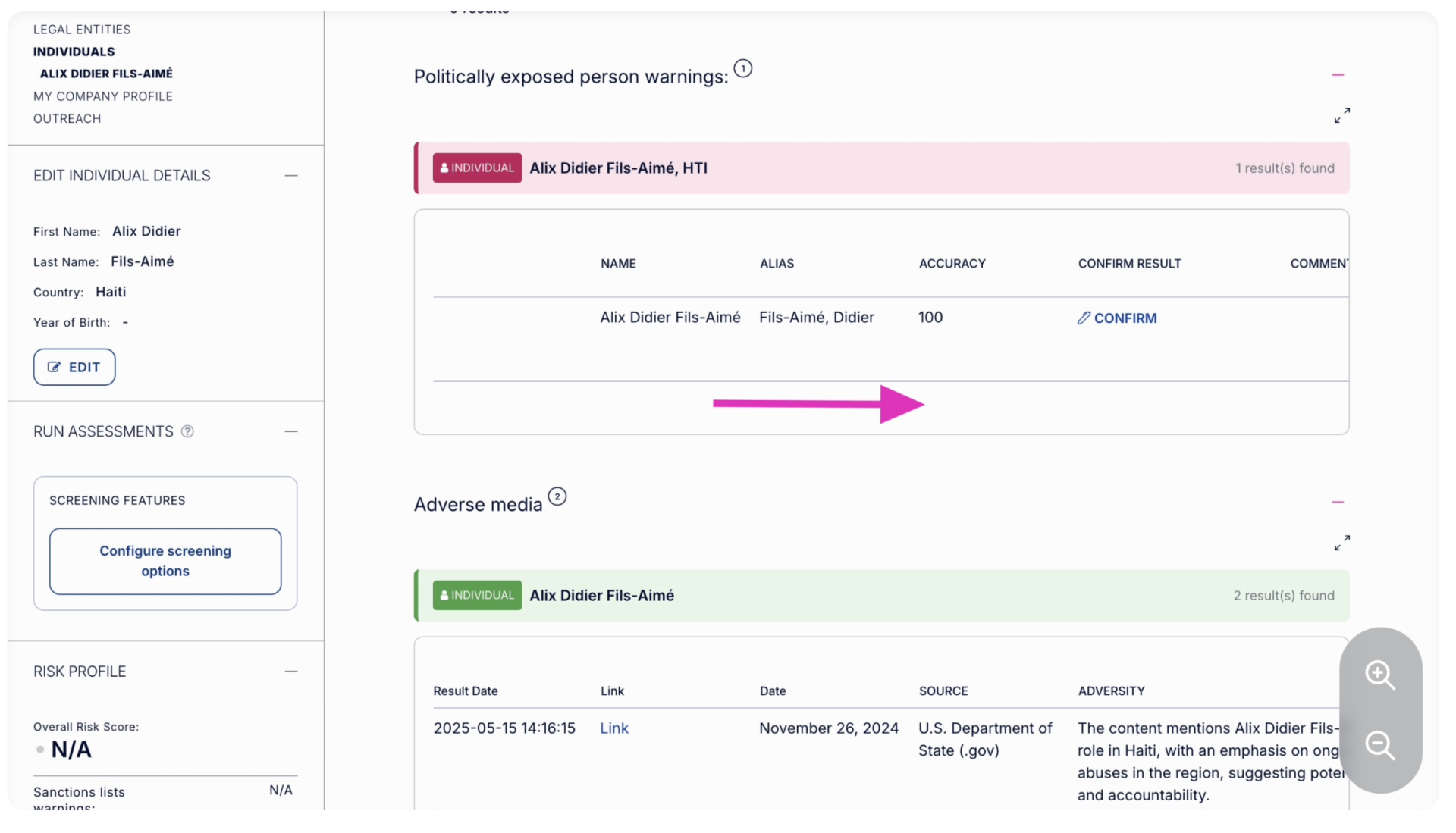
Reduce false positives with AI filtering
Instead of overwhelming users with raw data, AI filtering helps reduce noise and prioritize meaningful signals. This improves clarity and decision-making.
Launch follow-up actions
✔ Send questionnaires
✔ Request documentation
✔ Distribute policies
✔ Provide AI-generated training or certifications
Scale efficiently
✔ Batch onboard large numbers of partners
✔ Receive prioritized results in minutes
✔ Automated ongoing monitoring with alerts
Maintain audit-ready evidence
✔ Timestamped results
✔ Source-linked findings
✔ Exportable reports
Related reading: EUDR Supply Chain Monitoring: How Supply Chain Monitor Works and PEP and Sanctions Screening: Assess Risk and Avoid Sanctions with Trusty QuickScreen 360.
Discover
Trusty QuickScreen360
Screen partners against global sanctions lists, debarment and exclusion databases, politically exposed person records, anti-corruption and financial crime indicators, as well as human rights and environmental signals.
Frequently asked questions
Third-party risk management for SMEs is the process of identifying and managing legal, financial, and reputational risks introduced by suppliers, contractors, distributors, and other business partners.
It typically includes screening partners against sanctions lists, politically exposed persons databases, financial crime indicators, and relevant ESG risk signals. The goal is to prevent regulatory exposure and protect the business from indirect misconduct.
Yes, small businesses should screen business partners to reduce exposure to sanctions violations, corruption risks, and reputational damage.
Regulators, banks, and enterprise clients increasingly expect even SMEs to demonstrate reasonable due diligence before onboarding third parties. Screening helps show that the business took proportionate steps to assess risk.
SMEs screen suppliers for sanctions by checking them against global sanctions lists issued by authorities such as the UN, EU, UK, and US.
This can be done manually through official government databases or through screening software that consolidates multiple sanctions lists into a single searchable system. The check should be documented and repeated periodically.
Proportionate due diligence means aligning the depth of investigation with the level of risk presented by a business partner.
Low-risk domestic suppliers may require basic sanctions and PEP screening, while higher-risk or cross-border partners may require enhanced checks, adverse media review, and additional documentation. The objective is reasonable and risk-based oversight, not maximum investigation in every case.
A PEP screening check identifies whether a business partner or its beneficial owners are politically exposed persons.
PEPs are individuals who hold or have held prominent public functions, such as government officials or senior state executives. Because of their position, they present elevated corruption and bribery risk and may require enhanced due diligence.
Business partners should be rescreened periodically or when risk exposure changes.
Many SMEs conduct annual rescreening as a baseline. Higher-risk partners may require more frequent checks or ongoing monitoring. Rescreening is important because sanctions lists and adverse media can change after onboarding.
Screening is an initial structured check against sanctions lists, PEP databases, and other risk indicators. Due diligence is a broader investigative process.
Screening identifies red flags. Due diligence involves deeper analysis, document review, and risk assessment when red flags or higher exposure justify further review.
SMEs can conduct affordable third-party screening by using risk-based processes and scalable screening tools rather than commissioning full investigative reports for every partner.
Applying baseline screening to all partners and reserving deeper investigations for higher-risk cases helps control cost while maintaining defensibility.
Yes, ESG factors are increasingly part of third-party risk management.
Environmental controversies, human rights issues, and governance failures within a supplier network can create reputational and contractual risk. Many enterprise clients now assess ESG exposure across their supply chains.
There is no universal law that mandates a specific screening process for all SMEs, but sanctions laws prohibit doing business with designated individuals and entities.
SMEs are responsible for ensuring they do not transact with sanctioned parties. Implementing structured sanctions screening and maintaining documentation helps demonstrate reasonable compliance if questioned by regulators or financial institutions.