
How to
Implement a compliance program
in a small business
Regulatory expectations for small businesses are increasing, particularly around internal reporting, data protection, and governance. Whistleblower protection laws, ongoing data privacy obligations, and growing supply-chain and ESG pressure mean SMEs are increasingly expected to show structured, proportionate compliance practices. A basic compliance program helps demonstrate reasonable effort and reduce risk when reviewed by regulators or business partners.
Implementing a compliance program is no longer limited to large organizations. Small and medium sized businesses are increasingly expected to show that they manage risk responsibly and respond appropriately when issues arise.
For many SMEs, compliance still feels unclear or overly complex. Requirements vary by industry and location, resources are limited, and there is rarely a dedicated compliance role. As a result, compliance often exists informally until an incident, audit, or customer request forces action.
This page explains how to implement a compliance program in a small business in practical terms. It focuses on what needs to exist, how the elements fit together, and what regulators and partners typically expect to see.
Jumpstart into compliance
Trusty Compliance solutions
Setup your compliance system in minutes - not months. With Trusty's pay-as-you-need credits system, a full suite of compliance tools are available whenever you need them, without costly contracts or subscriptions.
Why small businesses need a compliance program
Legality and trust
Compliance obligations apply to SMEs as well as large companies. Data protection, internal reporting, workplace conduct, and governance expectations do not disappear because an organization is small.
Regulators generally assess SMEs using a proportionality lens. They expect reasonable, structured measures that reflect the risks of the business, not enterprise-level complexity.
Without structure, compliance relies on memory and informal practices, which offer little protection when something goes wrong.
A compliance program helps a small business:
- Define clear expectations
- Reduce legal and operational risk
- Detect issues earlier
- Demonstrate good faith if reviewed
SME compliance
Quick start guide
Essential elements
All compliance programs should include
A compliance program is not a single document or tool. It is a system made up of a few elements that reinforce each other. Each element matters on its own, but the value comes from how they connect. The goal is not complexity, but coherence.
An effective compliance program is not about documents in isolation. It is about how expectations, understanding, reporting, and records work together.
Implemented this way, compliance becomes a practical safeguard rather than an administrative burden.
For small businesses, the strongest programs:
✓ Fit real working conditions
✓ Prioritize clarity and usability
✓ Produce reasonable evidence over time
Starting a compliance program
Step by step guide
Here are the steps we recommend to get started building a compliance program for small businesses.
At a practical level, an effective compliance program includes:
✓ Clear rules that define expectations
✓ Ways to communicate those rules so they are understood
✓ A safe mechanism for raising concerns
✓ Basic records that show how issues are handled over time
Step 1
Identify which compliance requirements apply to you
The first step is understanding which compliance obligations are relevant. Not every regulation applies to every SME. Requirements vary based on factors such as:
- Industry and activities
- Location
- Size of the business
- Type of data handled
- Use of contractors or third parties
Trying to address everything at once often creates unnecessary complexity. Focus on identifying a realistic starting point based on:
- The main regulatory areas that affect your operations
- The most relevant risks
- Any obligations already being met informally
Step 2
Define clear rules and expectations
Once relevant obligations are identified, define clear rules.
Rules are usually captured in policies or internal guidelines. What matters most is clarity and relevance, not volume.
Rules should reflect real situations employees may face. Vague or generic language makes them harder to apply in practice.
Each set of rules should also have clear ownership so they remain current as the business changes.
For most SMEs, core areas include:
- Standards of conduct
- Data protection and confidentiality
- How concerns should be reported
Step 3
Make compliance information accessible to everyone
Rules only work if people can access them when needed.
In small businesses, employees may work in offices, on factory floors, in the field, or across multiple sites. Many do not have regular access to computers or corporate email.
If policies are hard to access or unclear, they are unlikely to influence behavior. Accessibility is often more important than formal distribution.
Compliance information should be:
- Easy to find
- Accessible without desk-based assumptions
- Available on common devices
- Readable and understandable at speed
Step 4
Ensure employees understand what applies to them
Access does not guarantee understanding. Regulators increasingly focus on whether employees understood the rules relevant to their role. Simply sharing a document is not enough.
Training does not need to be complex. For SMEs, brief sessions or simple checks of understanding are often more effective than long courses.
What matters is being able to show that reasonable steps were taken to ensure understanding.
Effective compliance programs emphasize:
- Relevance by role
- Short, focused explanations
- Reinforcement of key points
Step 5
Provide a safe way to raise issues internally
A compliance program should include a clear way to raise concerns.
Internal reporting mechanisms, including whistleblowing channels, help identify issues early and reduce escalation risk.
People are more likely to speak up when they trust the process. Even a small number of genuine reports can significantly reduce risk.
Effective reporting systems are:
- Easy to access
- Confidential
- Taken seriously
Step 6
Keep simple records that show reasonable effort
Records exist so the business can explain what it did if questions arise later. Consistency matters more than detail. A small number of connected records is more useful than fragmented information spread across emails or folders.
The standard is typically reasonable effort, not perfect documentation.
For an SME, this usually means being able to show:
- What rules were in place
- How people were informed or trained
- How concerns were handled
Step 7
Maintain compliance without overengineering
Compliance is not a one-time exercise. It needs to evolve as the business changes.
The aim is sustainability, not process for its own sake. For SMEs, maintenance should be lightweight:
- Review rules periodically or when regulations change
- Update communication when roles or risks shift
- Monitor reporting trends
- Adjust as the organization grows
Trusty Compliance
Turn any document
into dynamic training
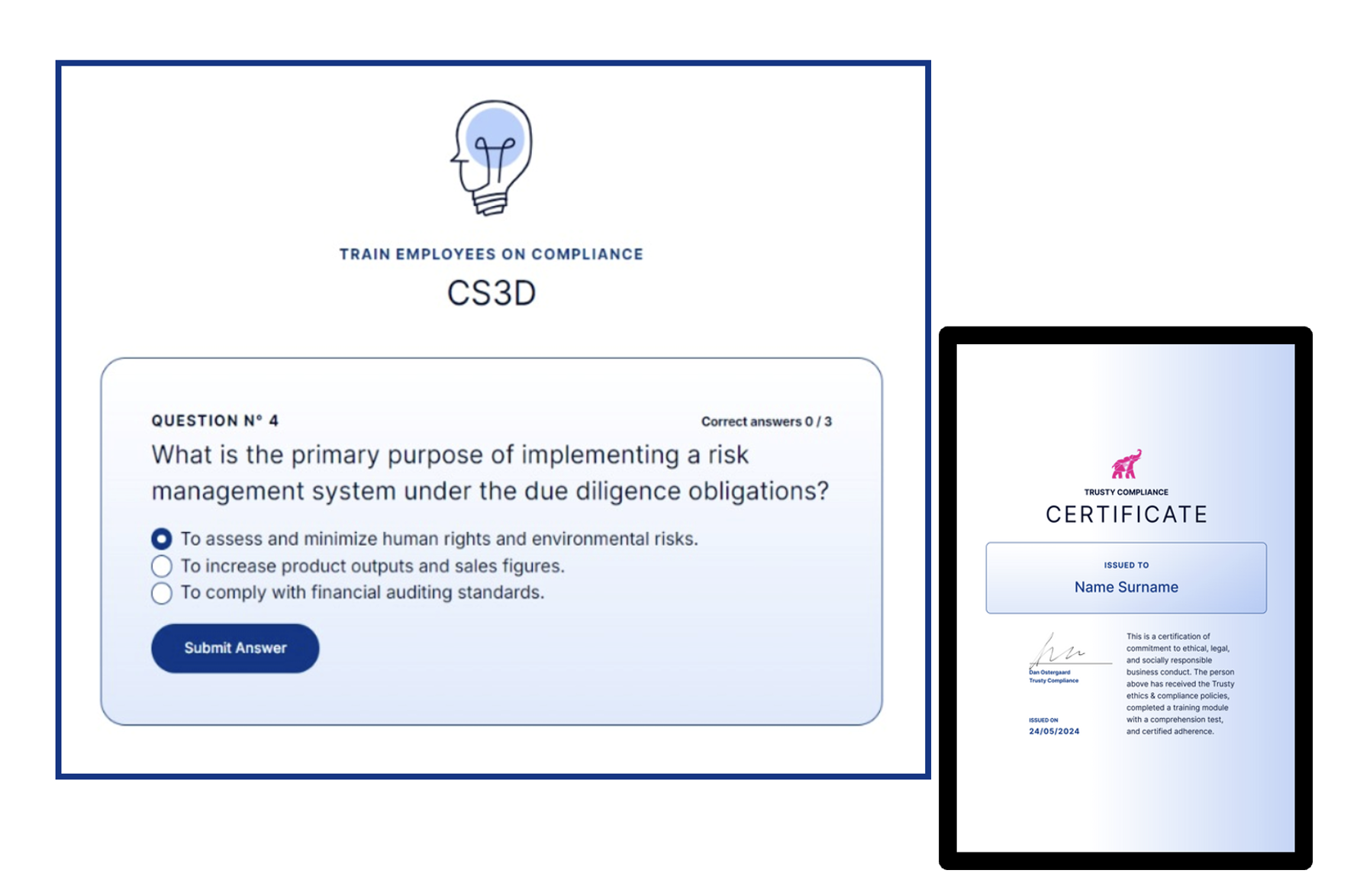
Trusty Compliance App instantly converts your internal documentation into professional training programs and certifications. Gain the peace of mind that comes with documented proof of understanding.
Common compliance mistakes small businesses make
Many SME compliance efforts fail for similar reasons. Avoiding these mistakes often has more impact than adding new controls.
Mistake 1:
Overcomplicating too early
Attempting to mirror the complex governance structures of a multinational can paralyze a small team with unnecessary bureaucracy. It is more effective to build a lean, scalable framework that addresses your specific risks rather than implementing every possible control at once.
Mistake 2:
Assuming access equals understanding
Simply hosting a PDF on a shared drive does not guarantee that your team knows how to apply those rules in high-pressure situations. True compliance requires verified engagement to ensure employees actually grasp the “why” and “how” behind the policy.
Mistake 3:
Losing evidence across disconnected tools
Storing training logs in one spreadsheet and policy receipts in another makes it nearly impossible to provide a cohesive defense during a contract review. Centralizing this data prevents the “evidence gap” that occurs when information is scattered across fragmented systems.
Mistake 4:
Ignoring non-desk workers
Compliance systems often mistakenly cater only to office staff, leaving field teams or remote workers without easy access to essential reporting tools and guidance. This gap creates significant “blind spots” in your risk profile where fraudulent activity is most likely to go unnoticed.
Mistake 5:
Treating reporting as a formality
If whistleblowing channels exist only to tick a box, employees will rarely trust them enough to flag genuine concerns. A reporting system must be independent, secure, and backed by a clear process to show that disclosures are taken seriously by leadership.
Small business compliance
frequently asked questions
Answer:
In many cases, small businesses are not required to implement the same formal compliance programs as large enterprises. However, SMEs are still expected to meet regulatory obligations and demonstrate reasonable, proportionate measures based on their risks, industry, and location.
Answer:
A basic compliance program typically includes clear rules, ways to communicate and reinforce those rules, a safe method for raising concerns, and simple records showing how issues are handled over time.
Answer:
SMEs are generally expected to show reasonable effort, not perfect documentation. This usually means being able to explain what rules were in place, how employees were informed or trained, and how concerns were addressed.
Answer:
Yes. Compliance expectations apply regardless of role. Policies and reporting mechanisms should be accessible and understandable for employees who do not work at desks or have regular access to computers or email.

Stop worrying about compliance
Start focusing on your business
with
Trusty
We have advised numerous Fortune 500 companies, public organizations, and SMEs on compliance matters. More than 1,000 companies have chosen our solutions to supercharge their compliance.