
EUDR Passport: EUDR software
Keep your goods moving for only €90.
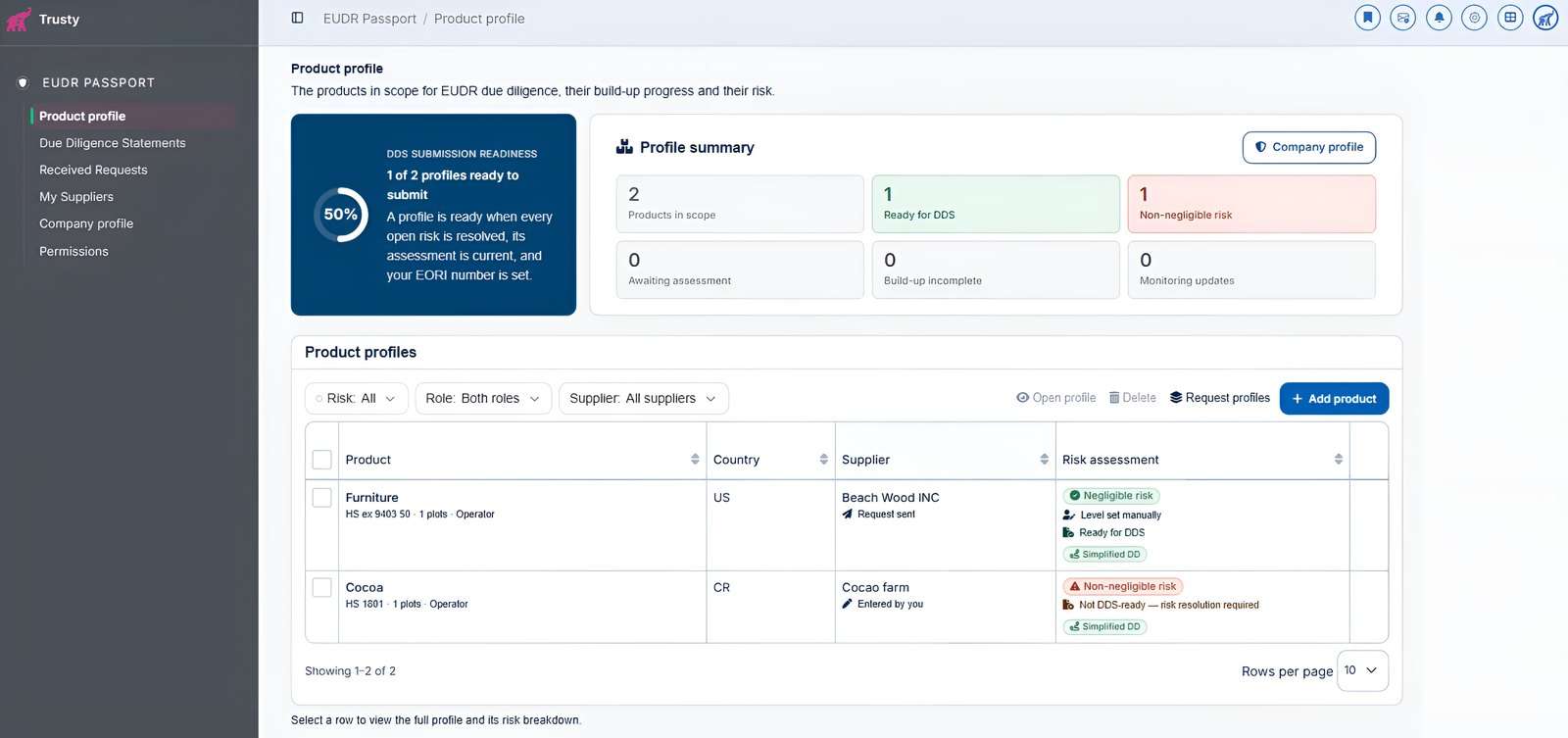
EUDR Passport is EUDR software for collecting supplier data, assessing risks, resolving issues and filing your due diligence statements.
- Free to get started
- Free for your suppliers
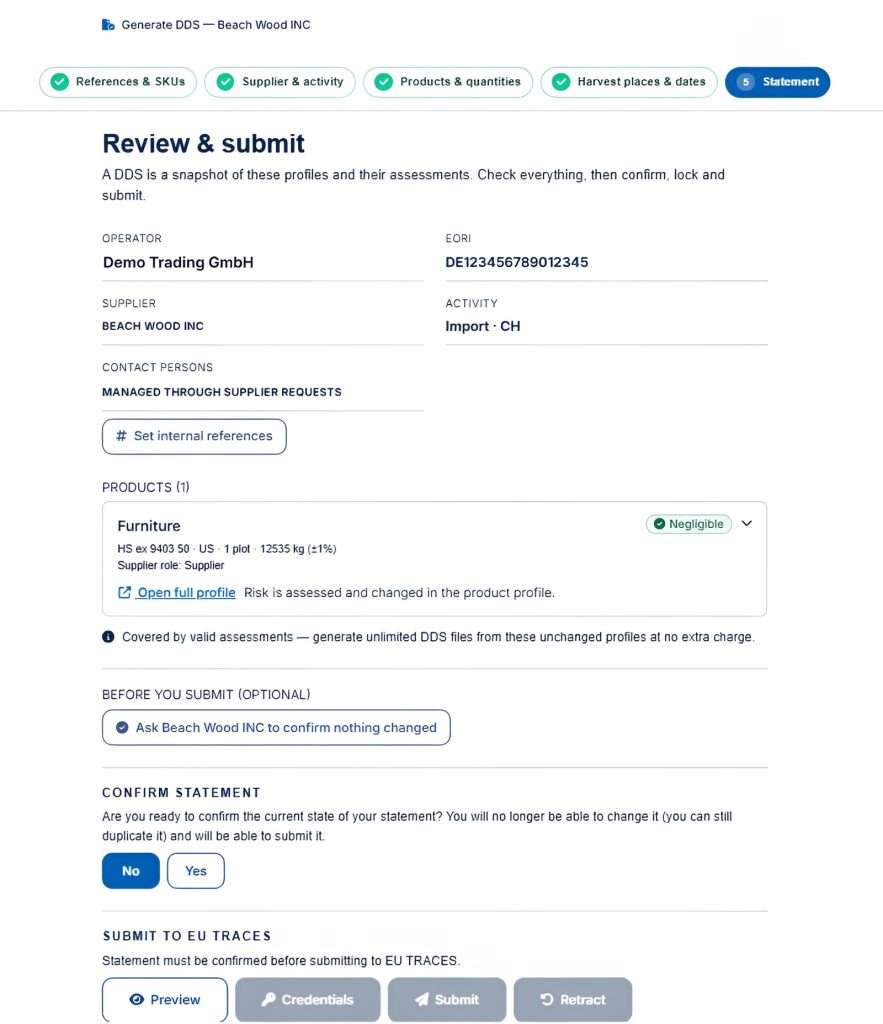
- File as many statements as you need
What describes your company?
We import or produce the goods.
We buy from an EU importer, or we resell.
Our EU customers ask us for EUDR data.
A simpler way to manage EUDR compliance.
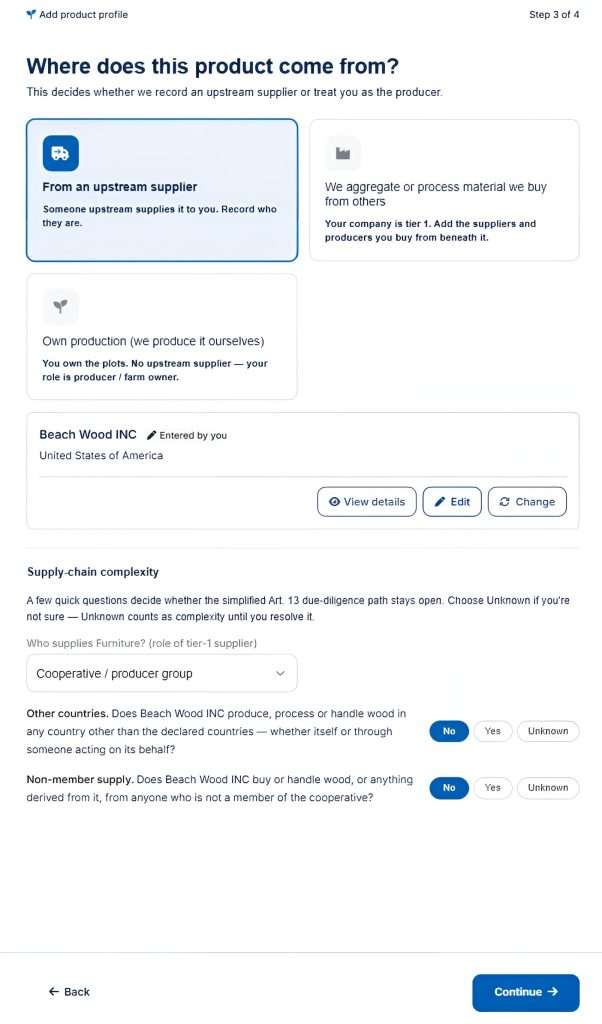
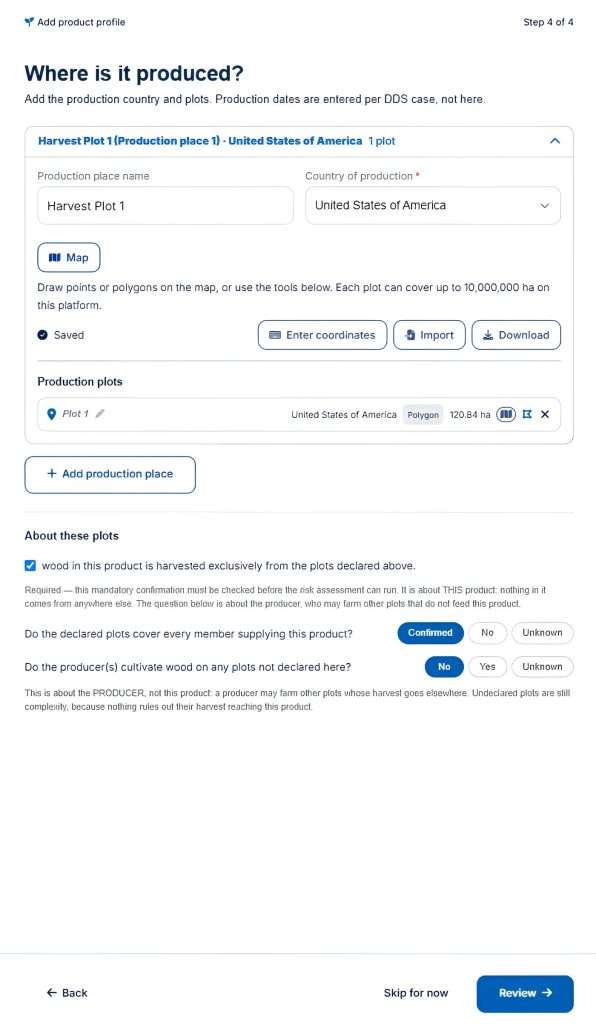
Set up your product profile
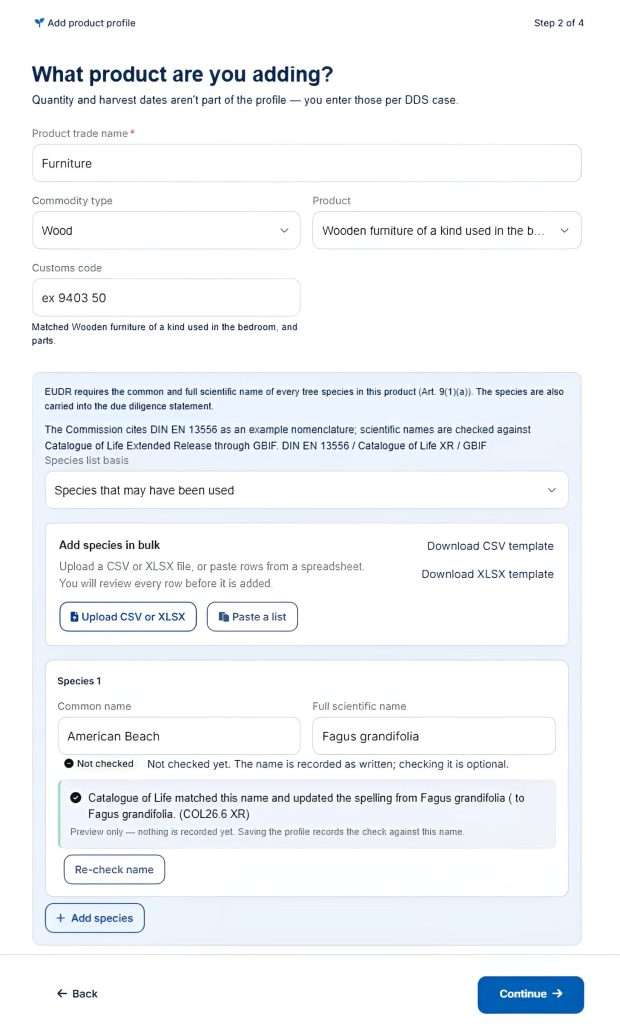
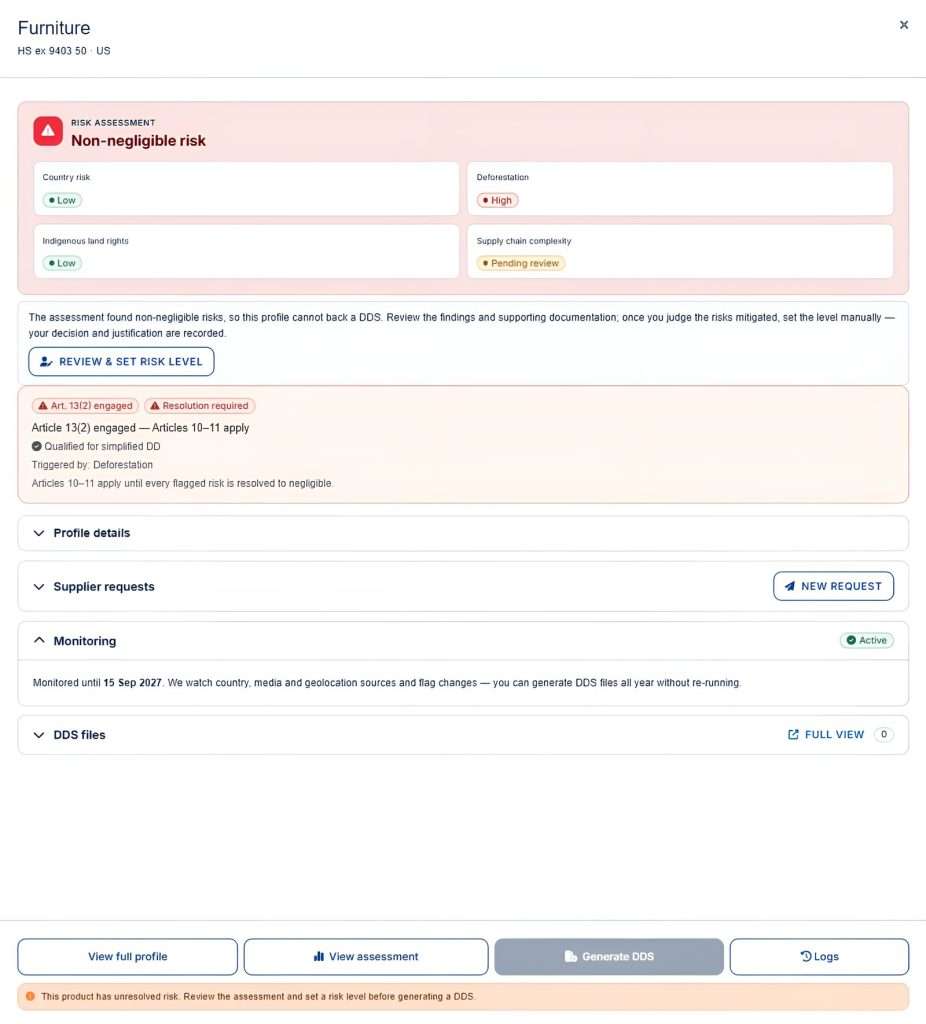
Comprehensive risk assessment
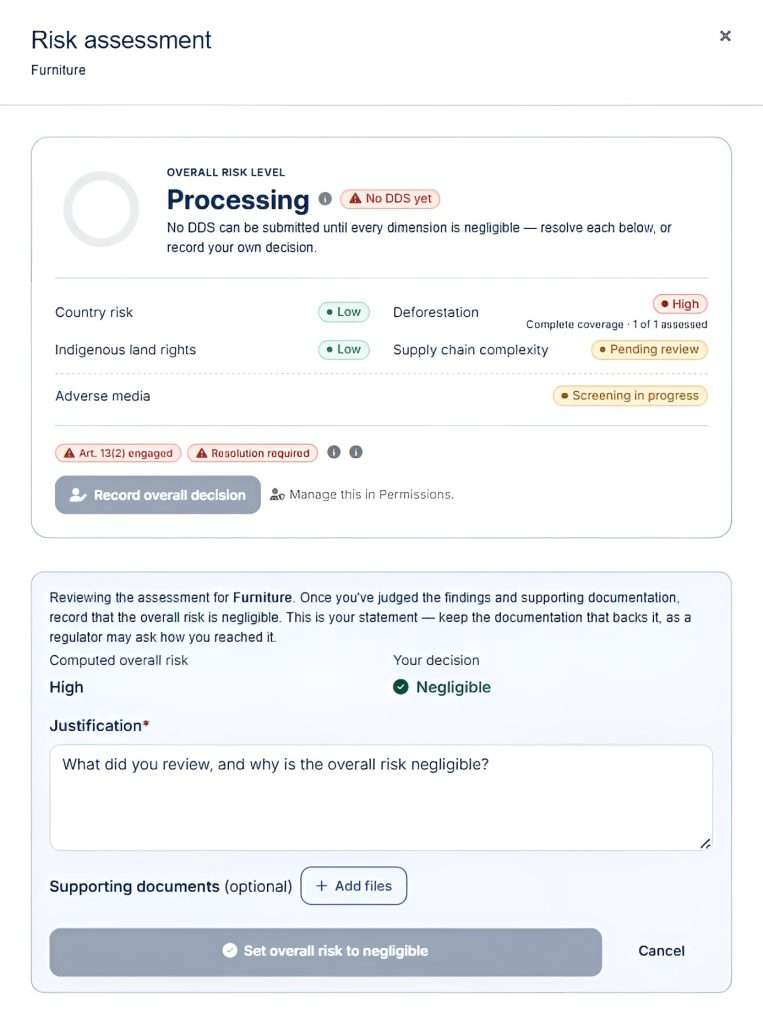
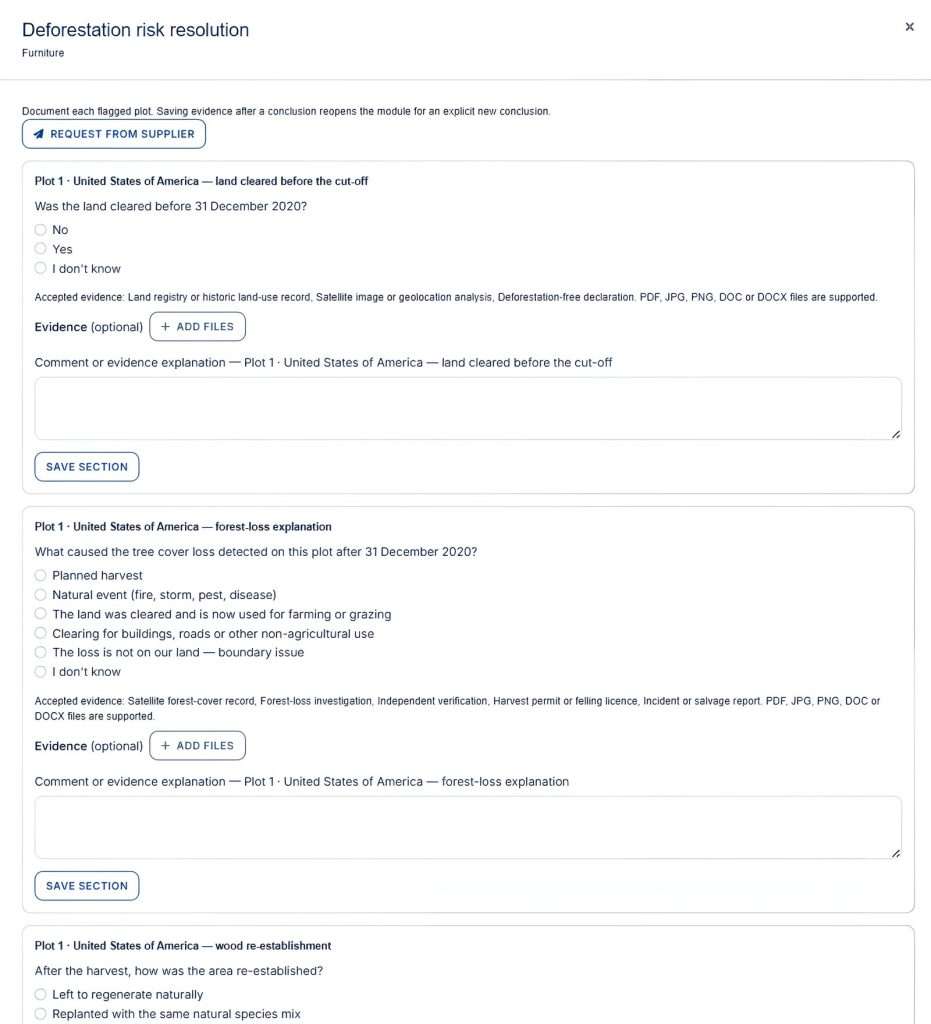
Flexible risk resolution tools
Due diligence statements included
Built for EUDR requirements.
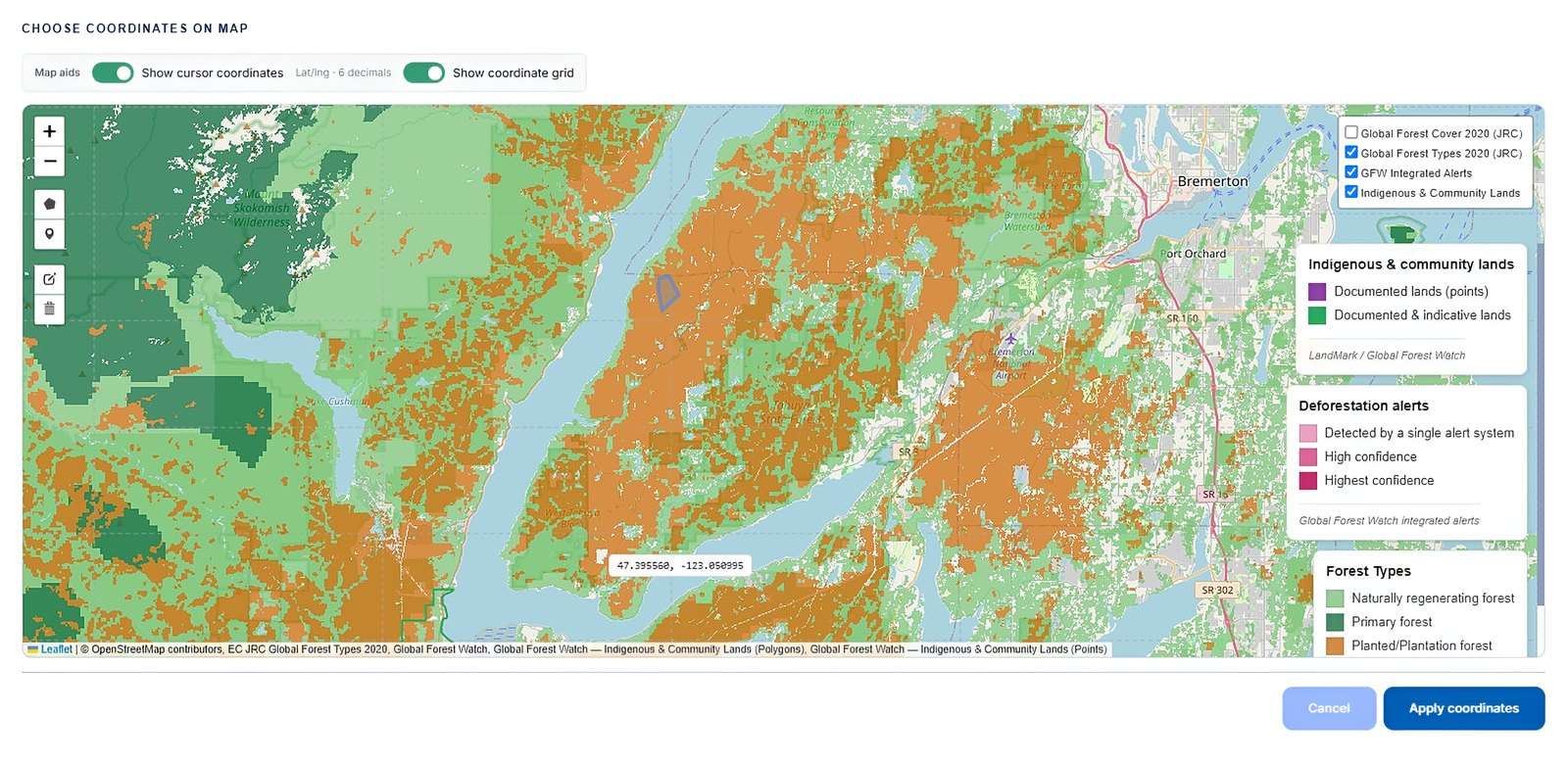
See every plot on global forest maps
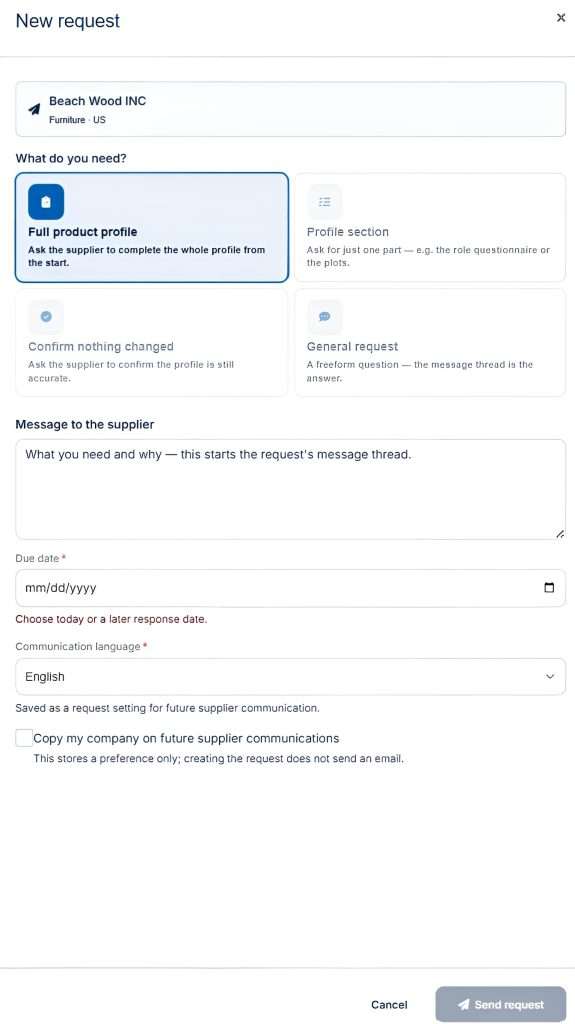
Request exactly what you need from suppliers
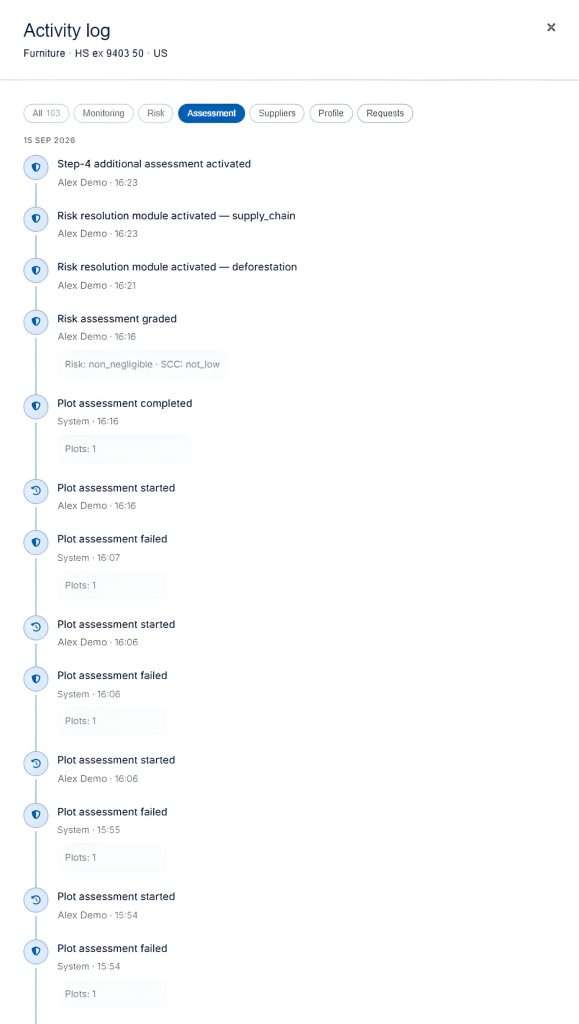
12 months of monitoring and a full audit trail
Plain-language guidance, step by step
The software takes minutes. Your supplier data takes weeks.
Collect plots and origin data, for free with EUDR Passport.
EUDR software with a predictable annual cost
- Risk assessment for the product profile
- 12 months of monitoring
- Unlimited due diligence statements while the profile stays unchanged
- No fees per shipment or DDS
An importer bringing coffee and cocoa into the EU
A forestry company selling timber from its own EU forests
A chocolate maker buying from EU importers
A wholesaler reselling coffee and cocoa in the EU
For your compliance or legal colleague: what the law requires and how EUDR Passport covers it
Step | What the law requires | How EUDR Passport covers it |
|---|---|---|
Collect | Gather product, supplier and geolocation data for every plot before placing goods on the EU market (Art. 9). | Product profiles hold all Art. 9 data. Supplier onboarding is free, and suppliers answer online without paying for an account. |
Assess | Assess the risk of non-compliance across all four risk chapters. Simplified due diligence can apply where all commodities come from low-risk countries and the risk of circumvention or mixing is negligible (Art. 13). | Automated risk assessment for each product profile, a clear answer on whether simplified due diligence applies, and 12 months of monitoring included. |
Resolve | Where risk is not negligible, take mitigation measures until it is, such as extra documents, supplier checks or audits (Art. 11). | Flagged risks are resolved in the product profile, by you or with the optional Resolve modules. Evidence, reasoning and the risk level you set are recorded as your documented mitigation. |
File | Submit a due diligence statement to the EU Information System before placing products on the market, and keep the reference number (Art. 4). | Unlimited due diligence statements filed with your own credentials at no extra cost, or through our authorised representative. Reference numbers are stored automatically. |
Keep records | Keep due diligence statements and supporting evidence for five years and show them to authorities on request (Arts. 4(3), 9(1), 12(5)). | Statements, evidence and the full audit trail stay in EUDR Passport and export in one click for inspections. |
Downstream and traders | Collect the reference numbers of the statements of suppliers that are operators, and keep them (Arts. 5(3)(a), 5(4)). | Monitoring of your suppliers’ products, including reference number checks, adverse media and screening against EU infringement judgments, with guided responses when something changes. |
Frequently asked questions
Getting started and pricing
What is EUDR Passport?
EUDR software from Trusty AG for companies that place or export products covered by the EU Deforestation Regulation. You build a product profile per supplier and product, collect plot and supplier data free of charge, run the risk assessment, resolve flagged risks and file unlimited due diligence statements to TRACES. The risk assessment costs €90 per product profile per year, with 12 months of monitoring included.
What is a product profile?
One supplier, one product and the plots where it is harvested. This is what we mean by one supply chain: when we price per supply chain risk assessment, we price per product profile. One supplier providing two products means two profiles. Two suppliers providing the same product also means two profiles.
When do I need another risk assessment?
A new supplier or a new product creates a new product profile. If the plots of an existing profile change, the risk changes too, so the profile gets a new risk assessment, charged like the first one. Shipments never trigger a new assessment: you can file as many due diligence statements from an unchanged product profile as you need.
What does EUDR Passport cost?
Creating an account, setting up product profiles, inviting suppliers and collecting their data is free.
The risk assessment costs €90 per product profile per year. This includes 12 months of monitoring and unlimited due diligence statements filed with your own EU registration. That is all you need to get a reference number.
Optional extras are guided Resolve modules and filing through our authorised representative if you don’t have your own EU registration. Downstream operators and traders follow a separate pricing model. Prices exclude VAT. See full pricing.
How is EUDR Passport billed?
Per product profile, per year, by invoice or card. Prices exclude VAT.
Are there additional charges for large harvest areas?
Product profiles with very large plot areas are priced by area. See full pricing for details.
Do my suppliers have to pay?
No. Suppliers and business partners you invite get their own free account to answer your requests. They only pay if they use EUDR Passport for their own compliance.
Do I need to be a compliance expert?
No. EUDR Passport is built for the people who actually hold the data: supply chain, procurement, quality and export teams. It guides you step by step, tells you which track applies and which documents you still need, and records everything for an audit.
Do I need to install software?
No. EUDR Passport is online software. You, your team and your suppliers work in the browser.
Risk assessment and resolution
What risks does EUDR Passport assess?
Deforestation, indigenous and community rights, supply chain complexity and country risk, plus adverse media and the EU’s list of infringement judgments. You get a clear answer: whether simplified or full due diligence applies, and what is still needed.
What is simplified due diligence?
Where all commodities come from countries the EU classifies as low risk and the risk of circumvention or mixing is negligible, simplified due diligence applies: no risk assessment or mitigation, but the information and the due diligence statement are still required. EUDR Passport’s risk assessment tells you whether it applies to each product profile.
What happens if a risk is flagged?
You review each flagged risk, upload your evidence, record your reasoning and set the risk level directly in the product profile. A flagged risk does not mean you have to buy a module.
Do I have to buy a Resolve module?
No. You can resolve flagged risks yourself at no extra cost. The Resolve modules are optional, for teams that want step-by-step guidance on which questions to ask, which documents to collect and how to document their findings.
What’s the difference between Resolve Essential and Resolve Complete?
Resolve Essential covers plot-level risks: deforestation, and indigenous and community rights. Resolve Complete adds guidance for country risk and supply chain complexity, on top of any plot-level risks. Both help you collect evidence and document your risk resolution. See full pricing.
Who is responsible for the final compliance decision?
Your company is. EUDR Passport guides you through every step and records the evidence, but your company remains responsible for the final assessment and compliance decision.
Does EUDR Passport keep an audit trail?
Yes. Every assessment, uploaded document, decision and supplier request is logged with the time and user, ready for internal reviews and audits.
What if my suppliers are slow to respond?
You see per product profile and supplier what is in and what is missing, and you can send follow-up requests from the platform. You can request a full product profile, a single section, or confirmation that nothing has changed. Supplier data is the slowest part of EUDR, so starting early is your best protection.
Due diligence statements and EUDR roles
Am I an operator, downstream operator or trader?
It depends on whether you place goods on the EU market or export them, or buy them from someone who already did. Check your EUDR obligations with our free tool: it takes two minutes and needs no account.
Can I submit due diligence statements directly to TRACES?
Yes. You generate the due diligence statement from the product profile and submit it to the EU Information System (TRACES). The reference number comes back into the platform.
Is there a limit on how many due diligence statements I can file?
No. From an unchanged product profile, you can file as many due diligence statements as you need with your own EU registration, with no fees per shipment or DDS.
Can I use one due diligence statement for several shipments?
A single due diligence statement can cover several shipments when the regulation’s conditions are met. Either way, EUDR Passport doesn’t charge per shipment or per statement.
What if I don’t have my own EU registration?
You can file directly from the app through our authorised representative, an EU law firm, for €10 per due diligence statement. This is separate from the risk assessment price.
How does EUDR Passport work for downstream operators and traders?
You don’t file due diligence statements, but you must collect the upstream reference numbers where your supplier is an operator, keep records for five years and act on new information. EUDR Passport checks reference numbers in the EU Information System, monitors your suppliers’ products, including against the EU’s list of infringement judgments, and guides your response when something changes.
How much does it cost for downstream operators and traders?
€75 per year for the first commodity from each supplier, and €25 for each additional commodity from the same supplier.
For example, if you buy coffee and cocoa from Supplier A and coffee from Supplier B, your annual cost is €175.
How long do EUDR records have to be kept?
Five years. EUDR Passport keeps your assessments, decisions, evidence and statements together, and they can be exported for inspections.
What if I’m a supplier outside the EU?
If an EU customer asks you for product, origin or plot data, you can answer through a free EUDR Passport supplier account. Your own legal obligations depend on your role and the transaction.
EUDR requirements and Trusty
What is the EU Deforestation Regulation (EUDR)?
The EUDR sets requirements for certain commodities and derived products placed on the EU market or exported from it. Its purpose is to reduce the EU’s contribution to global deforestation and forest degradation.
Which commodities are covered?
The seven commodities are cattle, cocoa, coffee, oil palm, rubber, soy and wood, plus derived products such as furniture, chocolate and paper. Whether a specific product is in scope depends on its customs code and the regulation’s product list.
When does the EUDR apply?
Under the current legislation, the EUDR applies from 30 December 2026. Micro and small operators who qualify have until 30 June 2027. Check your EUDR obligations to see which date applies to you.
Do micro and small companies have more time?
Micro and small operators who qualify have until 30 June 2027, but many still need to be ready by 30 December 2026. Check your EUDR obligations to be sure.
What if the EUDR rules or dates change again?
Setting up product profiles and collecting supplier data is free, so starting now costs you nothing. The plot and origin data you collect is the core of every EUDR filing, whatever the final dates.
Can FSC, PEFC or another certification replace EUDR due diligence?
No. Certification can be useful supporting evidence, but it does not replace an operator’s due diligence obligations.
What happens if a shipment doesn’t have a valid due diligence statement?
It can’t clear customs, so the shipment stops before any fine is discussed. Authorities can also confiscate the goods and the revenue from them, and exclude you from public tenders. Member States must provide for maximum fines of at least 4% of annual EU-wide turnover.
Where is EUDR Passport data hosted?
In the EU.
Who is behind EUDR Passport?
Trusty AG, a Swiss compliance software company. More than 1,000 companies use Trusty software.
Be ready before 30 December.
See how EUDR Passport works with your products and suppliers. Start collecting supplier data today: it is free, and it is the part that takes longest.
Free to get started · No commitment · Free for suppliers